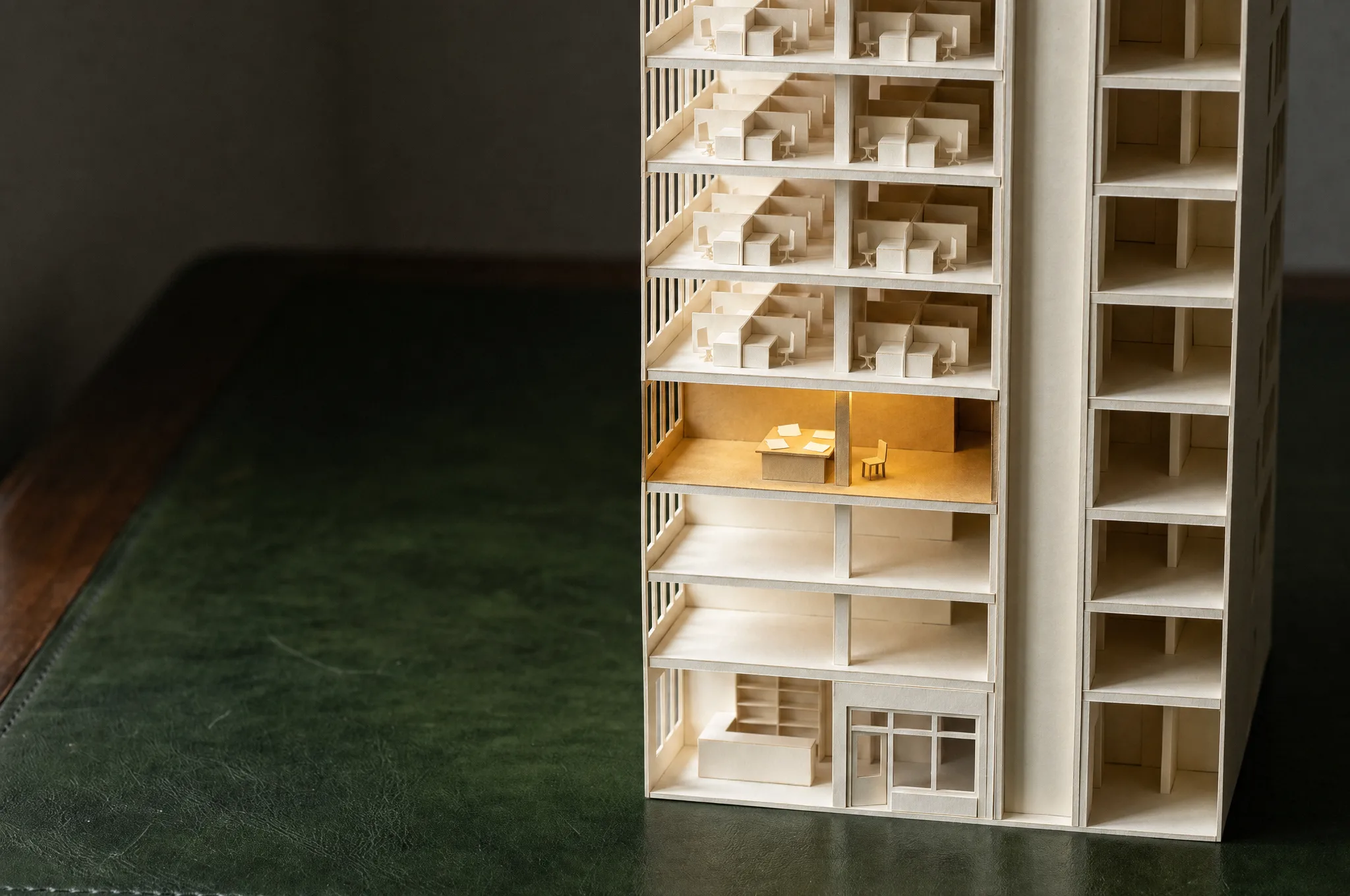

Picture an owner with 200 units spread across two partnerships and a limited company. The property manager sends rent rolls, the banks send loan statements, the accountant produces the annual accounts. One job still lands on his desk: turning all of that into a picture of the portfolio he can decide from.
- 01Which buildings pay their way over the long run?
- 02Where is capital expenditure coming up?
- 03Which loan is about to expire?
- 04What does all of it add up to for liquidity?
Running each building properly does not answer these questions. The owner has to steer the portfolio as a whole, across buildings, legal entities and loans.
The industry software was built for a different kind of organisation
In the GdW software survey of 2024, around 85 percent of the housing companies taking part said they run an ERP system from a software vendor (GdW Information 171, July 2024). These systems cover a large share of their day-to-day operations, with further applications added for document management, letting or reporting.
A system landscape like that can do a great deal. It also has to be implemented, maintained and woven into daily work, and that takes capacity that small owner teams often do not have.
Well-managed buildings do not add up to a steerable portfolio
Private owners use software and professional service providers too. Even so, the information usually comes together for the first time in the owner’s own spreadsheet.
Rent roll
How the units are let, as of today.
Loan agreement
The terms of the financing.
Annual accounts
What has already happened.
A decision about the next few years needs all three brought together and topped up with assumptions. That gets laborious quickly once several entities, mixed uses and more than one bank are involved.
So when a bank asks for current rents, loan balances and planned works, a fresh compilation usually begins. The next request starts the same work over again.
This is where EstateMate comes from
EstateMate grew out of a family office that wanted to steer its own portfolio. The starting question was a practical one: how do we get buildings, tenancies, loans, documents and figures into one coherent view?
We build for owners who carry that responsibility themselves and want to do it with a small team.
The yardstick is the next decision. What information does it need, how current is that information, and can you trace what the calculation rests on?
A solid foundation saves more than time spent searching. It lets you look at expiring loans, rent increases nobody has claimed and upcoming works together, and in time to act.